
Spotlight · The World
The World
Own history now: a continent telling its own story
At one fair in Johannesburg, fifteen African countries made the same argument: the record of a place belongs to the people who live it.
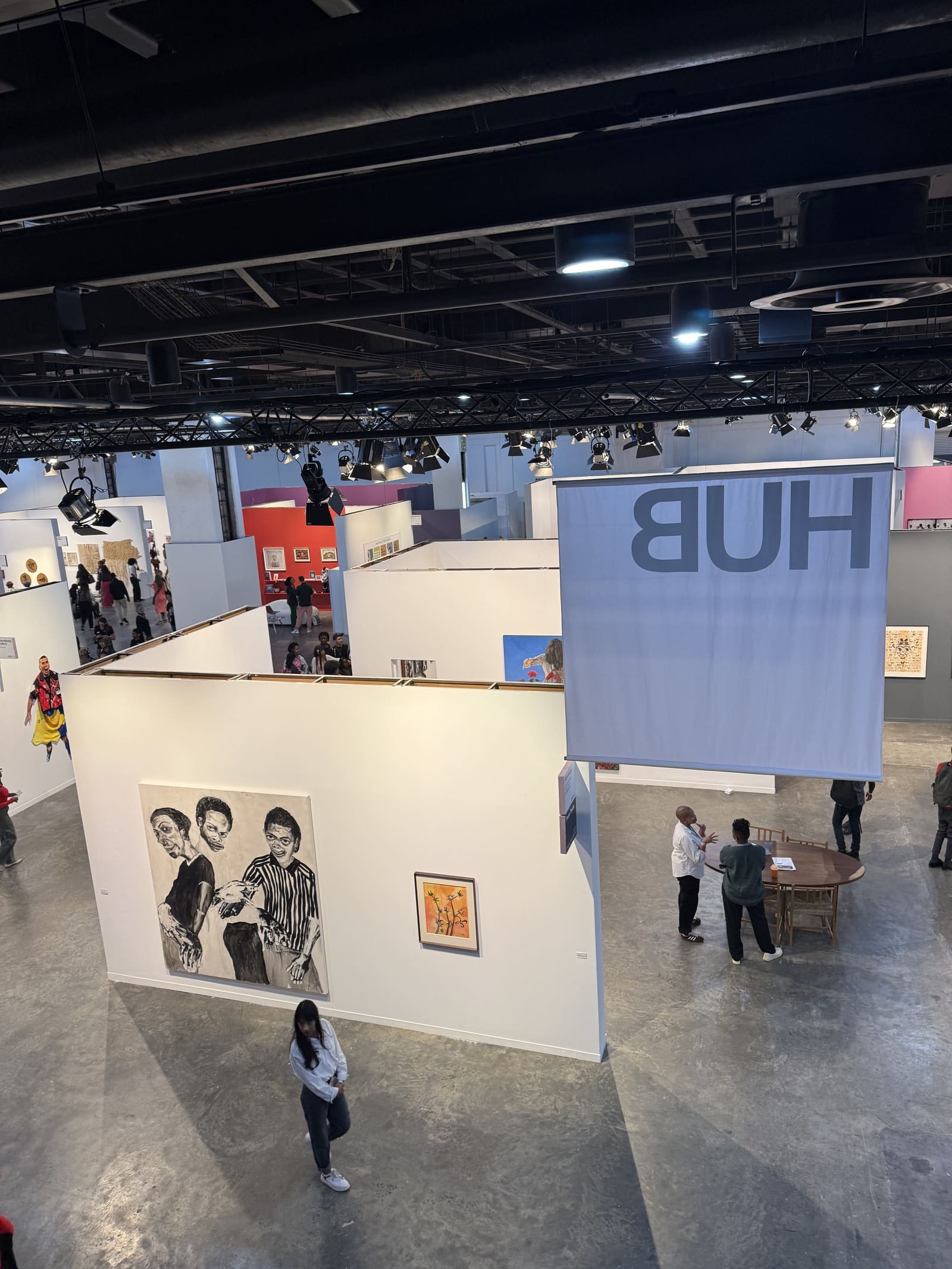
Own history now. The line ran along the banners at FNB Art Joburg, and it landed less like a slogan than an argument about power. Who keeps the record of a continent, and who gets to decide what it says.
Around fifteen African countries shared the floor this year, Ghana and Nigeria, Botswana and the DR Congo, Tanzania and Ethiopia. Each booth was a small embassy, and the thing it had come to defend was a version of the story its galleries will not hand to anyone else.
You could read the argument in the work. At the BKhz booth, Zandile Tshabalala’s show held a crowd, the Black figure at ease and in command of the frame rather than arranged inside someone else’s. On the Highlights Tours, Boitumelo Tlhoaele moved through Santu Mofokeng’s photography and Mikhael Subotzky’s vast Cape Town landscape, a country looking at itself instead of being looked at.
Ashraf Jamal’s walk stopped at Ricky Dyaloyi and Blessing Ngobeni, where the history on the wall does not flatter the people who wrote its first draft. The talks said the quiet part aloud. Curating otherwise. A new class of collecting. The room was deciding who the next custodians of the record would be.
That is the world this fair was reporting on, told through the people who make its images. A continent saying, out loud and in paint and photographs, that its history is its own to keep. Own it now, the banners said, before someone else writes it down for you.
More from the floor, once a week. Free.